I first encountered the term ABS Testauslösung while researching a persistent ABS warning light on a European vehicle brought into a workshop for diagnosis. The word looked intimidating at first dense German compound nouns often do. But once I understood what it described, I realized it is one of the most logical and well-named concepts in automotive safety engineering.
ABS Testauslösung comes from German and translates directly to “ABS test triggering” or “ABS test activation.” It describes the controlled moment when the Anti-lock Braking System engages either automatically as part of a self-check, during real emergency braking, or deliberately through a diagnostic tool. Understanding exactly what this term means, why it happens, and what it tells you about your vehicle’s safety status is genuinely useful knowledge for every driver.
Qucik Summary: ABS Testauslösung refers to the activation or self-check of a vehicle’s Anti-lock Braking System, which is usually normal but can indicate a fault if warning signs persist.
Table of Contents
What Is ABS The Foundation You Need First
Before I explain ABS Testauslösung specifically, I want to make sure the foundation is clear. Everything else builds directly from this.
ABS stands for Anti-lock Braking System. It is designed to stop the wheels from locking up when you brake hard. Instead of allowing the wheels to skid and slide, ABS rapidly adjusts brake pressure so the tires keep better grip on the road. This helps you steer and stay in control during emergency stops or on slippery surfaces.
Anti-lock braking systems monitor your vehicle’s individual wheels and keep them from locking up during hard braking by pulsing the brakes several times per second. These systems gained legal mandate status in the United States when NHTSA required ABS installation in all new passenger vehicles as of September 1st, 2011.
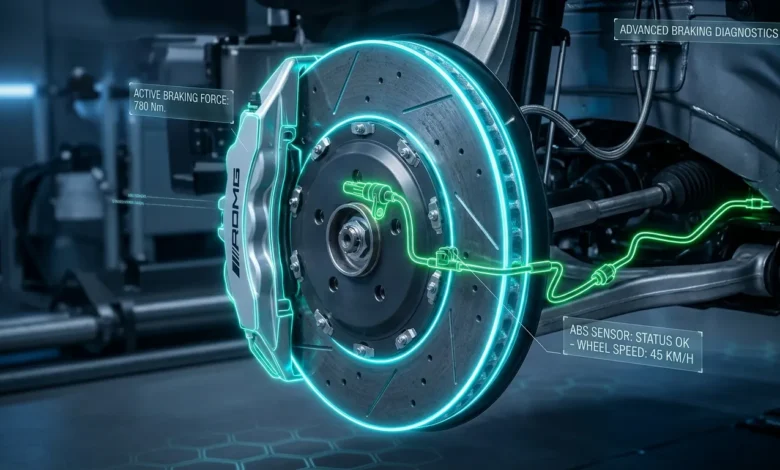
The system relies on four core components wheel speed sensors, hydraulic valves, a pump, and an electronic control unit. When the ABS pulses, it pumps hydraulic pressure to the brakes in rapid-fire succession, sometimes as rapidly as 15 times a second depending on the system. This function produces intermittent braking pressure that prevents wheel lock while preserving your ability to steer around an obstacle.
Also Read: Do the Driving Modes in Cadillac Lyriq Offer Different Ranges or Battery Usages?
What Does ABS Testauslösung Mean Exactly?
The word ABS Testauslösung comes from German and can be translated as “ABS test triggering” or “ABS test activation.” In simple terms, it describes the moment when the anti-lock braking system is deliberately activated to check that it still works correctly. This can happen automatically inside the vehicle or when a mechanic uses a diagnostic tool to run a controlled test of the system.
I found the easiest way to understand ABS Testauslösung is through three distinct scenarios. First the automatic self-check that every modern car performs when you start the engine and begin moving. Second the real-world activation during emergency braking when the system detects wheel lock. Third the deliberate diagnostic activation that a mechanic performs in a workshop to verify every component of the system works correctly.
ABS Testauslösung refers to the controlled activation or triggering of a vehicle’s Anti-lock Braking System for testing, diagnosis, or evaluation purposes. In simple terms, it describes the moment when ABS engages during braking and how that engagement is verified to ensure the system works correctly.
The Three Types of ABS Testauslösung
I found understanding the three distinct types of ABS Testauslösung helps drivers immediately identify which situation they are experiencing:
| Type | When It Happens | What You Feel | Normal? |
| Automatic Self-Check | Every startup, first few meters of driving | Brief click or light pedal movement | Completely normal |
| Emergency Braking Activation | Hard braking on any surface | Strong pedal pulsation, mechanical noise | System working correctly |
| Diagnostic Tool Activation | Workshop testing with car raised | Pump noise, valve cycling sounds | Intentional test |
| Fault-Triggered Activation | ABS activates at low speed or on dry road | Unexpected pulsation, warning light | Investigate immediately |
The fourth type fault-triggered activation is the one that should concern drivers. I found this pattern causes more unnecessary worry than any other ABS-related experience. Understanding the difference between normal self-test behavior and fault-triggered behavior removes that worry and helps drivers take appropriate action.
How ABS Testauslösung Works During a Self-Check
The ABS Testauslösung scenario represents the daily driving experience which most drivers encounter without knowing its official designation. The ABS Testauslösung process exists as a standard procedure which drivers experience without any need for concern. The system conducts this test because it needs to ensure operational readiness for its critical moment. The process start requires a temporary noise together with light pedal vibration which occurs during the initial vehicle movement. The ABS warning light should turn off at the end of self-checking process which should continue to stay off during driving activities.
Some drivers detect a click sound which emerges from the vehicle’s lower section during this procedure with the sound being most perceptible in quiet garage areas. The system health check leads to a temporary activation of the ABS dashboard warning light which then turns off. Both experiences represent standard behavior for the ABS Testauslösung self-check process.
How ABS Testauslösung Works During Emergency Braking
The ABS Testauslösung scenario demonstrates system functions through its most effective method while also surprising drivers who have not prepared for its operation. The ABS system remains inactive during regular driving conditions. The system activates itself when it detects an imminent wheel lock situation. Each wheel has sensors which track its rotational speed in real time. The control unit uses this data to detect when a wheel deceleration exceeds safe limits thus activating brake pressure control for that specific wheel. The system performs these actions at multiple points within each second which happens at a speed that exceeds all driver foot movements.
The system shows that ABS functions correctly while it confirms that your brakes have not become defective. The most crucial driving action which drivers must take during ABS operation requires them to apply consistent brake pressure while the system handles its automatic brake pulse management. The driver must stop brake pedal usage because doing so will hinder ABS system performance.
How ABS Testauslösung Works in a Workshop Diagnostic
Technicians may use this test when they need to check your vehicle brakes in the workshop setting. The technician uses the diagnostic device to activate ABS Testauslösung while the vehicle remains in a secure position on the test bench or when it is lifted. The system tests all components through this method which enables them to verify that valves and pump and control unit functions properly without needing highway emergency tests.
The diagnostic process uses ABS Testauslösung to detect malfunctioning wheel speed sensors which operate improperly only between certain temperature ranges or hydraulic valves which block at specific pressure settings or pumps that function at reduced speed compared to requirements.
ABS Warning Light What It Tells You
The ABS dashboard warning light is directly connected to ABS Testauslösung results. Understanding what different light behaviors mean helps you respond appropriately:
| Warning Light Behavior | Meaning | Action Required |
| Lights briefly then turns off | Normal self-check completed successfully | No action needed |
| Stays on after startup | System fault detected during self-check | Get diagnostic scan |
| Comes on while driving | Fault detected during normal operation | Drive carefully, get checked |
| Flashes repeatedly | Active fault system may be disabled | Stop safely, call mechanic |
| ABS + Brake light both on | Serious braking system fault | Do not drive get immediate help |
I found the combination of both ABS and Brake warning lights illuminating simultaneously is the scenario that requires the most urgent attention. This pattern can indicate low brake fluid, a hydraulic fault, or a failure in the base braking system not just the ABS overlay. Normal braking may be compromised.
Common Causes of Abnormal ABS Testauslösung
The most common ABS problems occur when sensors become contaminated with debris or metal shavings. Malfunctions also occur when sensor wiring becomes damaged, resulting in intermittent or no continuity. In more corrosive environments or serious brake system neglect, brake fluid can become contaminated and the hydraulic control unit fails to function.
I found five root causes account for the vast majority of abnormal ABS Testauslösung warnings:
Faulty Wheel Speed Sensors
Wheel speed sensors sit close to the wheel hub and brake rotor exactly where road debris, metal particles from brake pad wear, and road salt accumulate. A sensor contaminated with metal shavings sends false speed readings to the ABS control unit. The unit interprets the false reading as a wheel about to lock and triggers ABS activation incorrectly even at low speeds on dry roads.
I found cleaning contaminated wheel speed sensors resolves the problem in many cases without replacement. A mechanic removes the sensor, cleans the sensor tip and reluctor ring with brake cleaner, and reinstalls it. If the contamination has damaged the sensor element itself, replacement costs between $50 and $150 per sensor depending on the vehicle.
Damaged Sensor Wiring
Wheel speed sensor wiring routes along the suspension and wheel well areas exposed to constant movement, heat, and road debris. I found wiring damage from road impacts, suspension flex points, and corrosion causes intermittent ABS faults that can be frustratingly difficult to diagnose consistently. The fault appears in cold weather or after specific road conditions and disappears when the workshop inspects the car.
Reluctor Ring Damage
The reluctor ring also called the tone ring is a toothed ring attached to the wheel hub or axle shaft. The wheel speed sensor reads the passing teeth to calculate wheel rotation speed. Damaged, corroded, or missing teeth on the reluctor ring send irregular speed signals to the ABS control unit and trigger false ABS Testauslösung warnings.
Contaminated Brake Fluid
In more corrosive environments or serious brake system neglect, brake fluid can become contaminated and the hydraulic control unit fails to function. Brake fluid absorbs moisture over time reducing its boiling point and increasing its corrosive properties. Contaminated fluid damages the internal components of the ABS hydraulic modulator and can cause valve sticking that produces false ABS activation.
Faulty ABS Control Module
The ABS control module also called the ECU or electronic control unit is the least common cause of ABS faults but the most expensive to address. Module failures typically produce consistent, non-intermittent ABS warning lights and often appear alongside other electronic system warnings. Replacement costs range from $200 to $600 for the module itself, plus labor.
What To Do When ABS Activates While Driving
I found most drivers are not taught what to do when ABS activates which leads to the most common mistake of releasing the brake pedal in surprise.
If the ABS light turns on while you are already driving, stay calm. Your normal brakes still work, but you should assume that the anti-lock function may be disabled. This means that in a panic stop, the wheels could lock more easily, especially on wet, icy, or loose surfaces. To stay as safe as possible, keep more distance from the car ahead, avoid sudden aggressive braking, and drive at a moderate speed until the issue is checked.
How to Maintain Your ABS System Prevention Tips
I found regular maintenance prevents the majority of ABS faults that trigger abnormal ABS Testauslösung warnings. Here is what I recommend:
Brake Fluid Replacement Replace brake fluid every two years or 30,000 miles regardless of color. Fresh fluid prevents corrosion inside the ABS hydraulic modulator and maintains the boiling point necessary for effective braking under repeated hard use.
Wheel Speed Sensor Inspection Ask your mechanic to visually inspect wheel speed sensors and reluctor rings during every brake service. Catching debris contamination early prevents the sensor damage that makes replacement necessary.
Wiring Inspection During Suspension Work Every time suspension components are replaced or serviced, ask for a visual check of wheel speed sensor wiring routing. The flex points where wiring passes suspension joints are the most common wiring failure locations.
ABS Warning Light Response Never ignore a persistent ABS warning light. The light indicates the system has detected a fault and may be operating in a degraded mode. Your base brakes still function but the anti-lock protection that makes emergency braking controllable may be compromised.
Explore more content on Sonos Arc.
ABS Testauslösung and Related Safety Systems
I found understanding ABS Testauslösung becomes more useful when you understand how ABS connects to the other safety systems in modern vehicles.
Modern versions may not only prevent wheel lock under braking, but may also alter the front-to-rear brake bias. This latter function, depending on its specific capabilities and implementation, is known variously as electronic brakeforce distribution, traction control system, emergency brake assist, or electronic stability control (ESC).
Emergency Brake Assist standard on most modern vehicles from manufacturers including Mercedes-Benz, Volkswagen, BMW, and Toyota detects panic braking from the speed and force of your brake pedal application and automatically maximizes braking force even if you do not push the pedal hard enough. This system depends on the ABS hydraulic modulator being fully functional another reason why correct ABS Testauslösung verification matters.
Conclusion
I will give you my straight conclusion after researching every aspect of this topic thoroughly.
ABS Testauslösung is not a warning. It is not a fault code. It is not something to fear. It is a description of how a critical safety system proves it is working automatically every time you start your car, dynamically when you need it most, and deliberately when a mechanic checks your vehicle’s readiness.
Your ABS system works invisibly in the background every single day. ABS Testauslösung is how it tells you it is ready. Learn to recognize the difference between normal activation and warning signs and your braking system will never catch you off guard again.
FAQ
1.What does ABS Testauslösung mean in English?
I found the most accurate translation of ABS Testauslösung from German to English is “ABS test activation” or “ABS test triggering.”
2.Is ABS Testauslösung dangerous?
No ABS Testauslösung itself is not dangerous. It is a safety verification process. The normal automatic self-check that occurs every time you start your vehicle and begin moving takes less than a second and requires no driver response.
3.Why does my brake pedal vibrate when ABS activates?
The brake pedal vibration you feel during ABS activation is the hydraulic pump pulsing brake pressure to your wheels many times per second sometimes up to 15 times per second depending on the system.
4.What causes false ABS activation on dry roads?
I found false ABS Testauslösung activation on dry roads at normal speeds almost always traces back to one of three causes.
5.Can I drive safely with the ABS warning light on?
Yes your vehicle’s base braking system remains fully functional when the ABS warning light illuminates. The light indicates a fault in the anti-lock system specifically, not in the fundamental hydraulic braking system.